

Harsha Saxena Leads IICSR–GCCI Goa CSO Roundtable To Tackle Global Climate-Tech Adoption Gap
IICSR LOGO
Goa 2
Goa 4
Goa 5
IICSR–GCCI’s Goa CSO Roundtable united industry, government and academia for climate-tech adoption and turn net-zero ambitions into measurable projects
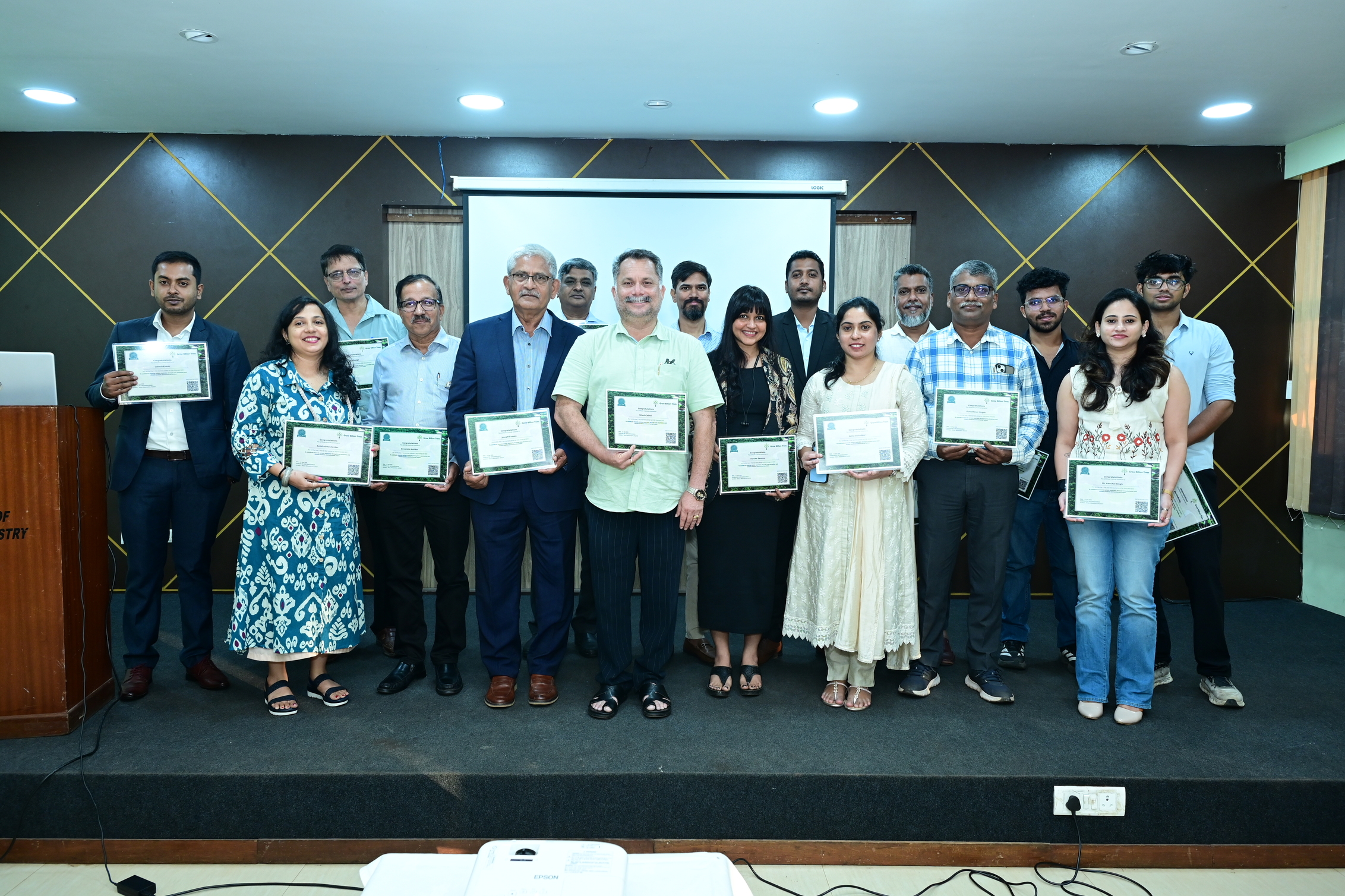
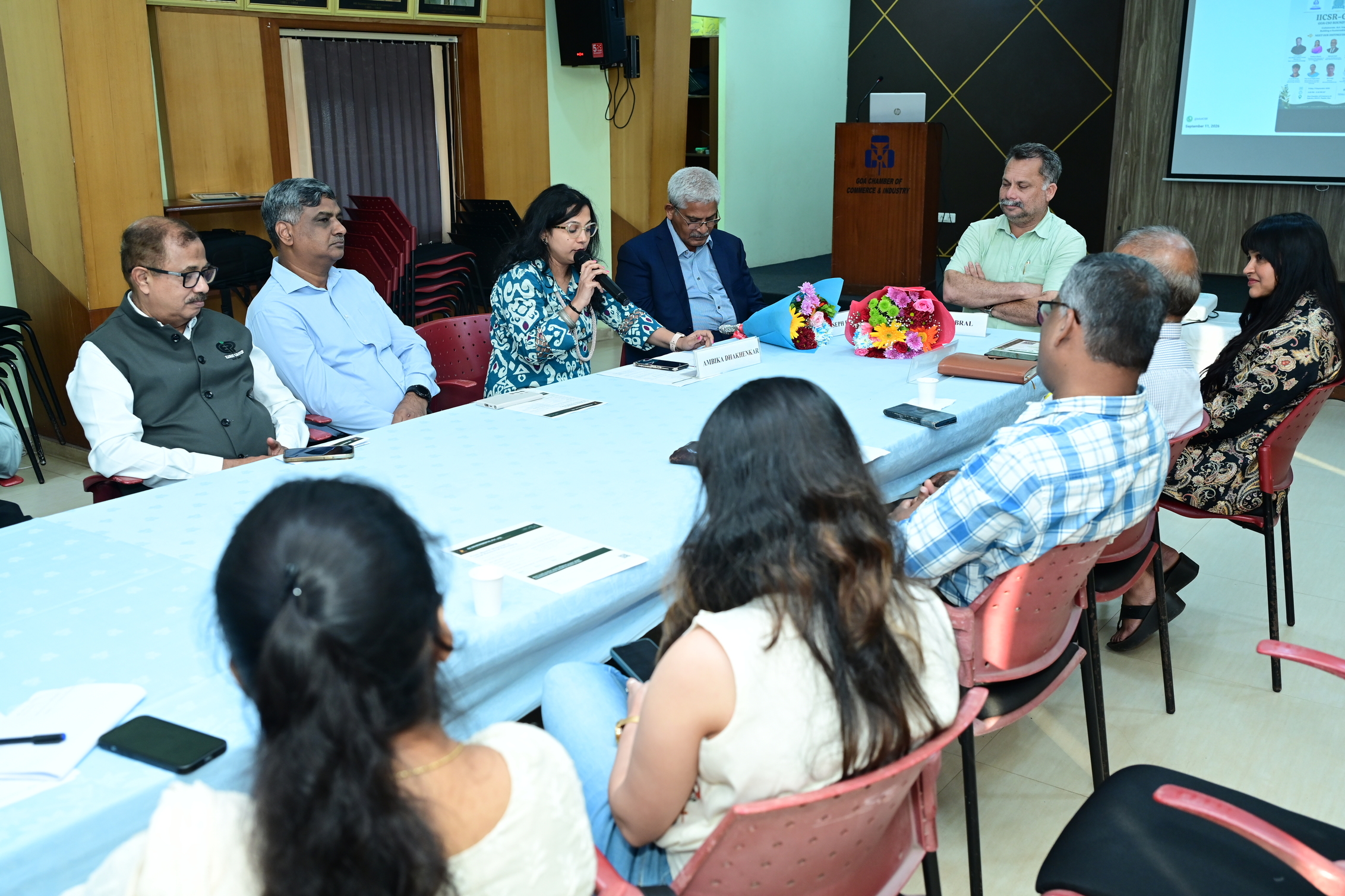
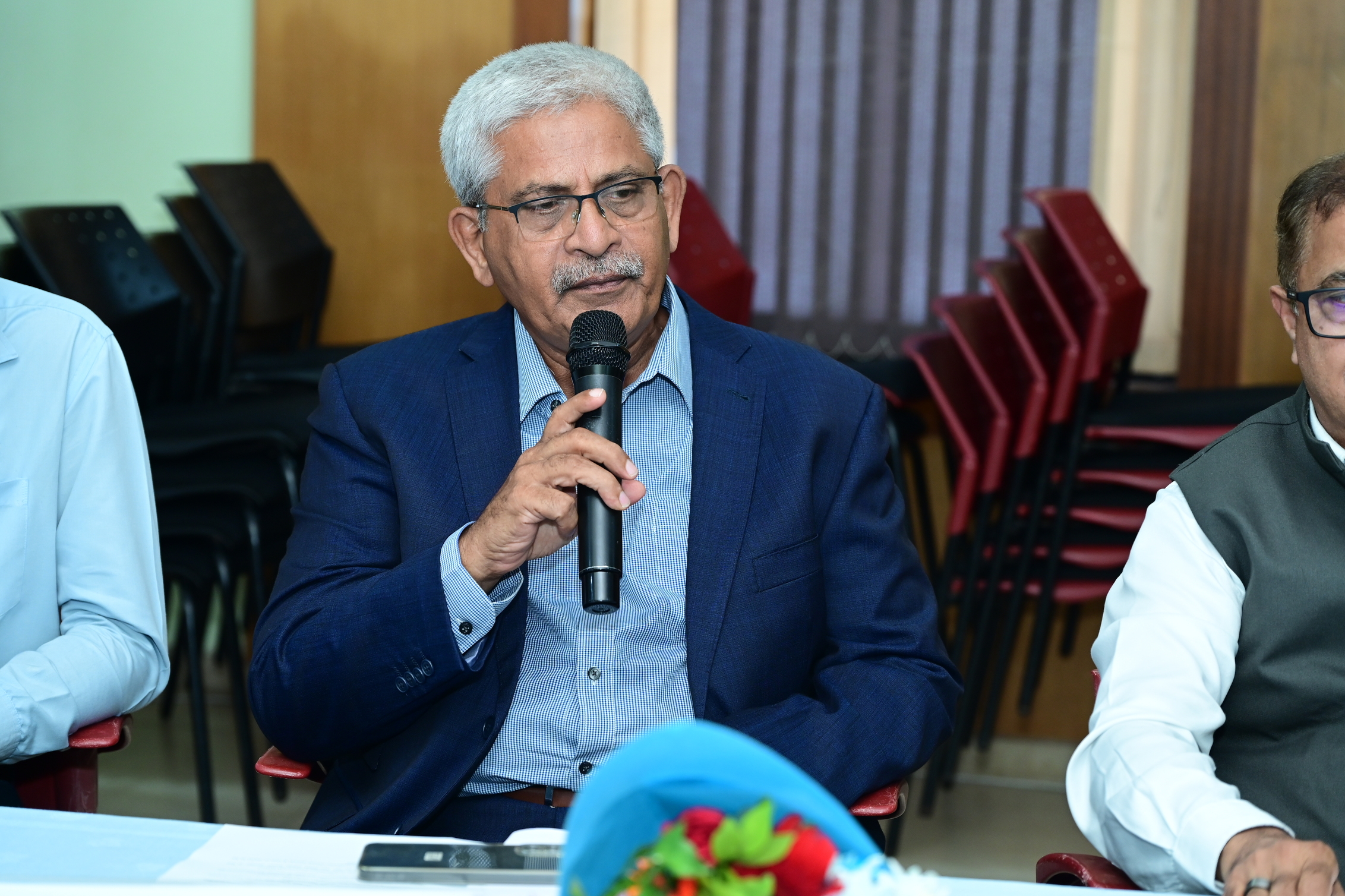
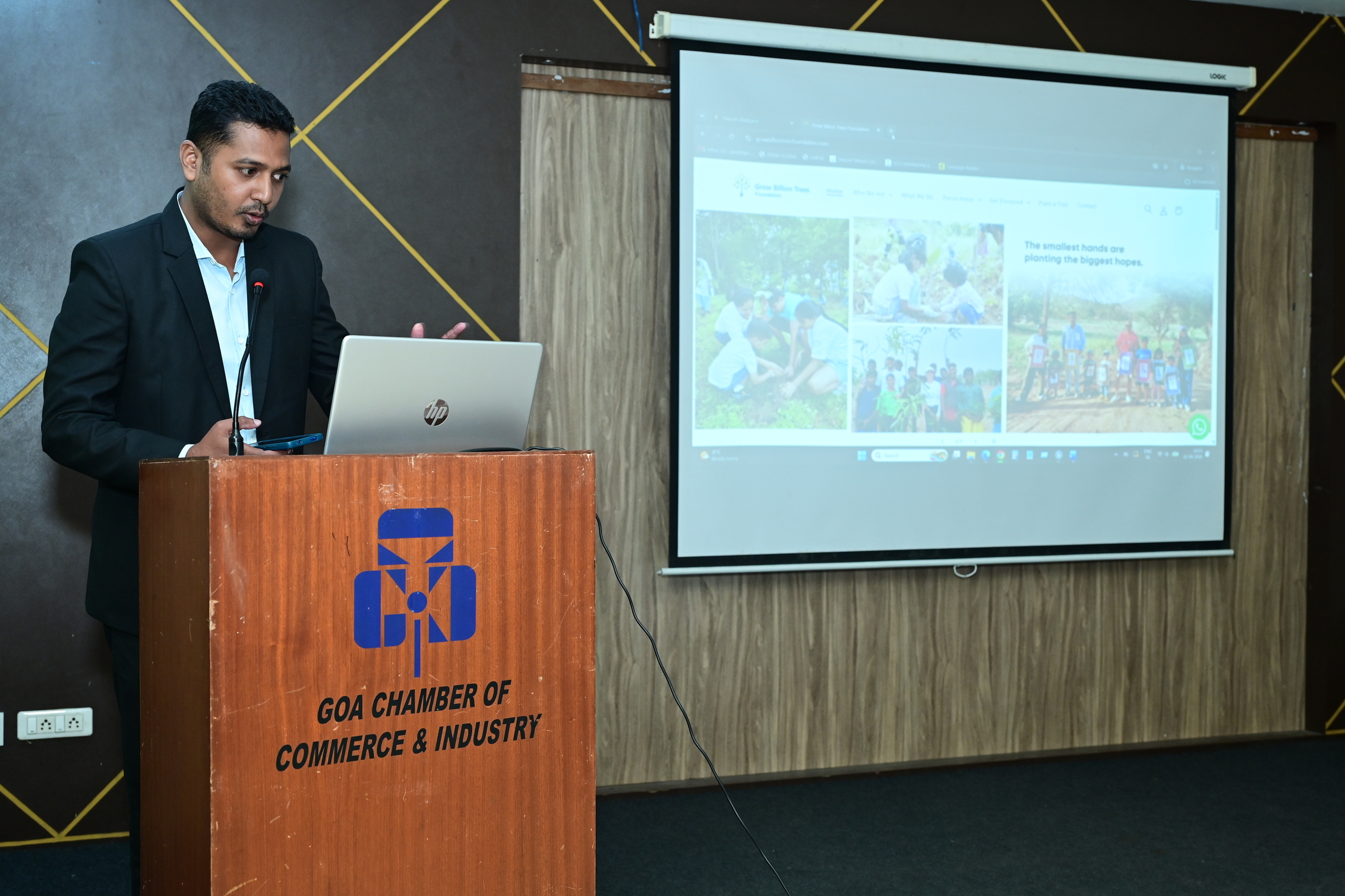
PANJIM, GOA, INDIA, September 15, 2026 /EINPresswire.com/ -- A sustainability meeting in Goa called for a shift from climate commitments to measurable climate projects as companies and institutions confront barriers to implementing net zero strategies. The IICSR–GCCI Goa CSO Roundtable, held on September 11, 2026, at the Goa Chamber of Commerce and Industry, brought together representatives from mining, airport operations, renewable energy, climate technology, government agencies, academia, consulting and civil society. Discussions covered industrial decarbonisation, energy storage, sustainable tourism, local carbon measurement, waste conversion and biodiversity restoration.Mr Joseph D’Souza, a GCCI Managing Committee member, said Goa could become a hub for experimenting with climate-tech innovations and that Goan industry was prepared to support their practical development and adoption. The meeting took place as the climate economy entered a more demanding implementation phase. The World Meteorological Organisation confirmed that 2024 was the warmest year recorded, approximately 1.55 degrees Celsius above the 1850–1900 average. World Meteorological Organisation Capital is moving toward the transition. The International Energy Agency expects global energy investment to reach $3.4 trillion in 2026. Approximately $2.2 trillion is projected to flow into renewables, nuclear power, electricity grids, storage, low-emissions fuels, efficiency and electrification, compared with $1.2 trillion for oil, natural gas and coal. International Energy Agency
Harsha Saxena of IICSR, who is leading the initiative, said a common adoption problem was visible across sectors. Organisations may understand what they need to decarbonise but lack the connected system required to select, finance, test and measure suitable solutions. Projects also require accountable owners, credible baselines, host sites, due diligence and transparent reporting.
Goa As A Climate-Tech Testing Ground
Goa’s compact geography could support integrated demonstration projects involving industries, hotels, universities, government agencies and communities. The Goa Energy Development Agency says its Clean Energy Roadmap is designed to decarbonise tourism, transport, industry, health, agriculture, fisheries and cooking by 2050. It also envisages achieving renewable-energy-based electricity supply across demand sectors by 2050 or earlier. Goa Energy Development Agency Sania Shirodkar, representing GEDA, outlined a net-positive panchayat programme being piloted in three locations with different development conditions. The interventions covered composting, rainwater harvesting, solar streetlights and coordination among government departments. A carbon calculator was being used to establish a baseline and monitor reductions, initially concentrating on Scope 1 and Scope 2 emissions.
The model could have statewide implications. Goa has 191 village panchayats and 1,561 panchayat wards, according to the Goa State Election Commission. Goa State Election Commission: Expanding the framework could create a distributed network of local climate projects, although each panchayat has different land-use patterns, infrastructure, waste, water, energy requirements and economic activities.
Other initiatives presented included agrivoltaics, floating solar, ground-mounted solar combined with battery storage and a sustainability rating framework for hotels. Agrivoltaics could be relevant to Goa because it combines agricultural production and electricity generation on the same land.
Mining And Aviation Expose Transition Constraints
Jagdish Desai, Head ESG – Iron Ore Business at Vedanta Group, presented the company’s net zero by 2050 target and its annual emissions-intensity reductions against a 2021 base year. The intervention also covered the technical and economic constraints affecting deeper reductions in iron and steel under local operating conditions. The International Energy Agency estimates that steel produces approximately 2.8 gigatonnes of carbon dioxide annually, equal to around 8% of total energy-system emissions. International Energy Agency's potential pathways include material efficiency, increased scrap use, renewable electricity, electric arc furnaces, hydrogen-based production and carbon management.
Each pathway has limitations. Electric arc furnaces require suitable metallic inputs and dependable electricity. Hydrogen-based production requires large quantities of low-emissions hydrogen, supporting infrastructure and customers willing to absorb the cost of early projects. Existing plants may pursue operational efficiency while waiting for transformative technologies to become commercially viable.
Chief guest Shri Nilesh Cabral said: “Goa is ready to demonstrate that responsible mining and environmental action can progress together. Our priority must be to support economic development and employment while adopting cleaner technologies, strengthening environmental safeguards and protecting the interests of local communities.” The discussion examined rehabilitation, water management, dust and noise control, lower-impact transport, monitoring and local economic participation. Battery-powered trucks and electrified equipment could reduce diesel use in selected applications, but equipment would need to be evaluated against load, terrain, duty cycle, charging requirements and operating hours.
Prasad Nair of GMR Airport presented another example of the limits of direct corporate control, outlining participation in the Airports Council International carbon accreditation system and the airport’s achievement of Level 3+ status through emissions management and offsets.
The airport presentation identified Scope 3 emissions as a challenge because airlines, ground-handling agencies, contractors and service providers control many sources. CDP reported in 2024 that disclosed upstream supply-chain emissions were, on average, 26 times greater than companies’ operational Scope 1 and Scope 2 emissions. Only 15% of companies analysed had established a supply-chain emissions target. CDP
Reducing these emissions requires supplier disclosure, procurement standards, shared charging infrastructure, contractual expectations and financing mechanisms accessible to smaller operators.
Storage, Waste And Tourism Offer Early Projects
Energy storage emerged as a candidate for demonstration. India’s Ministry of New and Renewable Energy reported approximately 168 GW of installed solar capacity and 58.5 GW of wind capacity by August 31, 2026. Ministry of New and Renewable Energy in India had already reached 50% cumulative installed electricity capacity from non-fossil sources in June 2025, five years ahead of its 2030 commitment. Installed capacity, however, does not provide dependable electricity at every hour. Lokesh Kumar of Arkle Energy presented flow batteries for applications requiring six to eight hours of storage. Potential uses included renewable-energy firming, diesel-generator replacement, mining operations and cyclic industrial loads. Commercial and performance claims would require independent project-level review.
The IEA estimates that global energy-storage capacity must increase sixfold to 1,500 GW by 2030 to support renewable expansion. Batteries are expected to deliver 90% of that increase, rising fourteenfold to approximately 1,200 GW. International Energy Agency A Goa pilot would need to compare duration, efficiency, degradation, safety, temperature performance, maintenance, recycling, end-of-life value and lifetime cost. Hotels, campuses, mining sites, industrial facilities and public infrastructure could provide potential host locations. Waste conversion generated similar interest. The roundtable examined gasification and pyrolysis technology that converts waste into thermal energy, biochar or material for pelletisation. A bankable project would require verified information on feedstock composition, seasonal availability, segregation, logistics, emissions, output quality, residual disposal and industrial demand.
Tourism provides a commercial reason for improving environmental performance. Goa recorded approximately 10.8 million tourist arrivals in 2025, including about 10.28 million domestic and 517,802 foreign visitors, according to the state’s Department of Tourism. Department of Tourism, Government of Goa
The proposed hotel sustainability rating could measure energy savings, renewable power, water reuse and waste diversion. Its credibility would depend on transparent criteria, comparable data and independent review. Linking ratings with energy audits, financing, training and technical support could create demand for climate technology while helping hotels reduce operating costs.
Academia And The Implementation Pipeline
Dr Anchal Singh of the Goa Institute of Management was among the academic representatives contributing to the discussion. Academic initiatives examined included environmental education, rooftop solar, rainwater harvesting, biodiversity and research on sustainable business and coastal systems.
Campuses and research facilities could operate as living laboratories where industry, government, faculty and students test interventions. A native-species restoration project received particular attention. The discussion emphasised that ecological success should be measured through species suitability, survival, canopy development, soil health, water requirements, maintenance and biodiversity value rather than the number of saplings planted. The transition also has workforce implications. Renewable-energy employment reached at least 16.6 million jobs globally in 2024, according to the International Renewable Energy Agency and International Labour Organisation.
Implementation will require professionals who combine engineering, carbon accounting, lifecycle assessment, finance, regulation, project management and supplier engagement. Mine electrification, hotel retrofits and panchayat carbon inventories require different expertise, but each depends on reliable measurement and delivery management. The meeting concluded with proposals for a collaboration mechanism coordinated by IICSR Group and GCCI. A working group could identify three to five pilots based on readiness, measurable impact, replicability and co-funding. Projects discussed included long-duration storage, waste-derived industrial heat, a net-positive panchayat, native-species restoration, treated-water reuse, hotel sustainability and mining decarbonisation. Each pilot would require a host organisation, implementation partner, technical reviewer, data owner, baseline, capital plan and reporting schedule. Quarterly reviews could track financing, delivery risks and measured outcomes.
IICSR, the International Institute of Corporate Sustainability and Responsibility, organised the meeting as part of its Regenerative Business Economy Dialogues and as a precursor to the International Net Zero Summit 2027. Proposed summit contributions include research papers, speakers, exhibitions, case studies and project-site visits. No single solution emerged because mining, aviation, tourism, local government, energy and biodiversity operate under different constraints. The shared problem was coordination: technology, knowledge, finance and operating needs are held by different institutions.
Goa’s size may allow those institutions to test how interventions work together. Progress will be measured by projects securing accountable owners, capital and baselines—and by the quality of their evidence.
Harsha Saxena
IICSR and Sustainability Knowledge Management
+91 79821 12389
email us here
Visit us on social media:
LinkedIn
Instagram
Facebook
YouTube
X
Other
Legal Disclaimer:
EIN Presswire provides this news content "as is" without warranty of any kind. We do not accept any responsibility or liability for the accuracy, content, images, videos, licenses, completeness, legality, or reliability of the information contained in this article. If you have any complaints or copyright issues related to this article, kindly contact the author above.
