China Optics Valley International Optoelectronics Expo Guide to Scanning Lens Solutions By CHANCCTV
FUZHOU, FUJIAN, CHINA, August 13, 2026 /EINPresswire.com/ -- Industrial identification, dimensional measurement, and non-contact digitization systems depend heavily on a scanner's optical front end to capture stable details within a strict working distance. A Reliable Scanning Lens Solution is never simply a piece of standalone glass; rather, it represents a cohesive imaging strategy that aligns the sensor format, field of view, wavelength filters, illumination, and validation protocols. Without this alignment, high-resolution sensors cannot overcome environmental contrast limits, and measurement tools fail to achieve repeatable geometric accuracy.
As a dedicated optical manufacturer, Fuzhou ChuangAn Optics Co., Ltd. (CHANCCTV) addresses these integration challenges by offering a diverse range of scanning lenses spanning multiple sensor formats and mount types. For advanced imaging requirements, the company publicly details configurations tailored for the IMX178 and IMX334 sensors, delivering 1/1.8-inch formats with 8.42M effective pixels alongside versatile infrared (IR) filter options. During events like the China Optics Valley International Optoelectronics Expo, engineering buyers consistently emphasize rapid technical matching. For these procurement teams, complete optical parameters, accessible testing samples, and clearly defined application boundaries are the core prerequisites for advancing a lens configuration into active project evaluation. By bridging product specifications, application data, custom support, and a transparent sample-validation process, CHANCCTV transforms overarching procurement challenges into verifiable optical specifications.
What Defines a Reliable Scanning Lens Solution
The substance of a Reliable Scanning Lens Solution extends far beyond manufacturing a precision lens; it requires locking the sensor, working distance, object size, resolution, illumination, and filter response into a unified imaging architecture. Engineers evaluating optical hardware must ensure that the glass resolves the necessary line pairs per millimeter across the entire field of view while matching the spectral output of the system's light source. Any mismatch between these elements creates data bottlenecks that software correction cannot fully resolve.
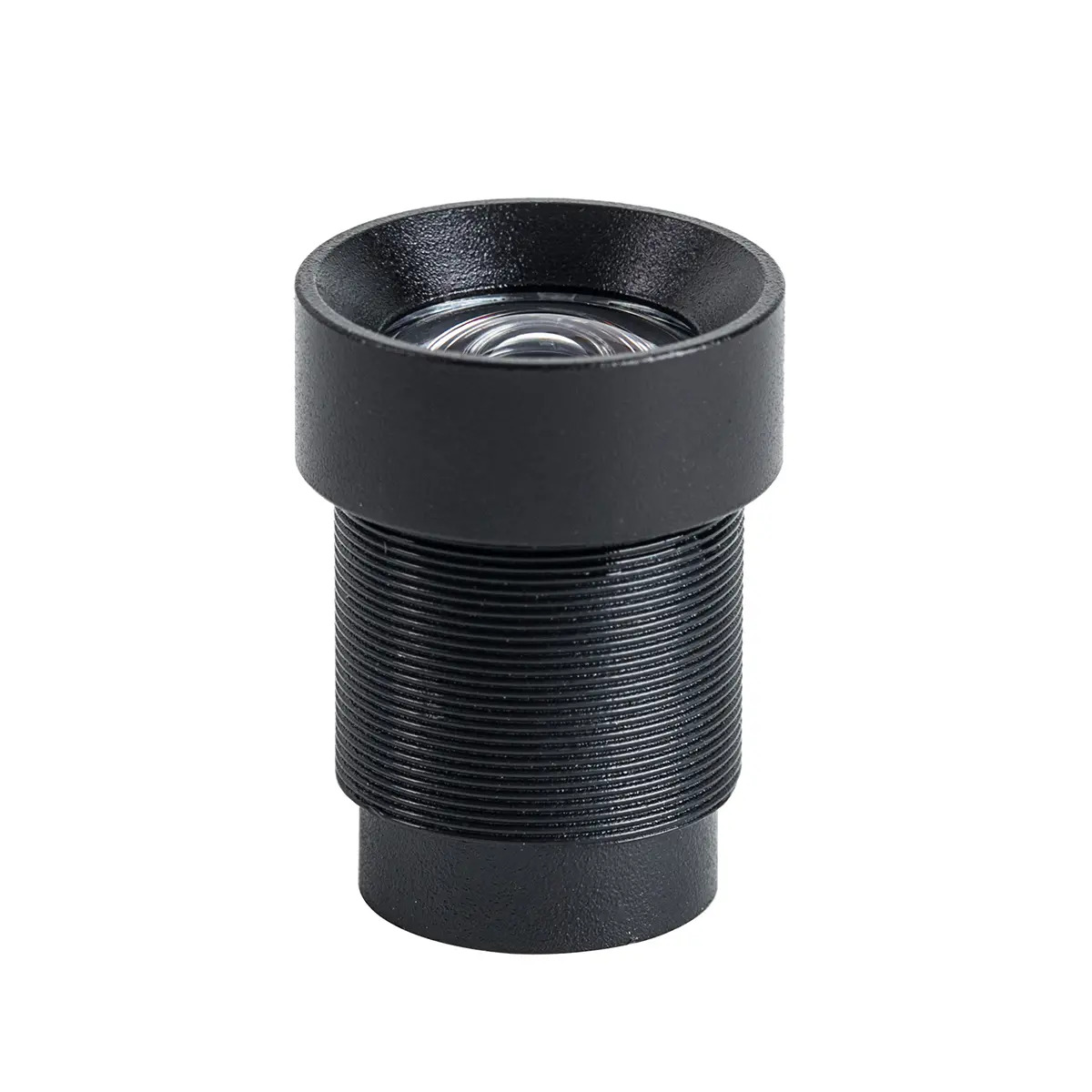
The CHANCCTV scanning lens portfolio is built around these system-level definitions, covering widely used sensor formats such as 1/4-inch and 1/2.7-inch. By offering structural choices like M5.5–M12 and M8/M12 interfaces, the manufacturer accommodates the tight spatial constraints of compact scanning modules and close-range identification systems. For higher-resolution demands, the 1/1.8-inch scanning lens configurations are optimized directly for the IMX178 and IMX334 platforms. These high-performance models feature 8.42M effective pixels and support multiple apertures. Crucially, they incorporate selectable filter options—including BW, IR650, IR850, and IR940—allowing integrators to precisely tune the optical path for specific illumination conditions and contrast requirements.
Industrial Scanning Configurations and Use Cases
Different industrial scanning tasks impose distinct demands on optical configurations. For instance, barcode and QR recognition systems prioritize localized sharpness and distortion control to ensure decoding algorithms operate efficiently at high speeds. Conversely, dimensional measurement applications rely heavily on geometric consistency to prevent edge warping, while package and label inspection tasks depend simultaneously on a broad field of view, edge-to-edge clarity, and lighting stability across unpredictable surfaces.
To support these varied applications, close-working-distance scanning lenses are essential for near-field image capture inside compact automation equipment. Standardized mounts such as M8 and M12 simplify the integration of these optics with small sensor boards and embedded scanning modules. For projects where optical distortion metrics are the defining critical factor, the manufacturer's low-distortion product lines can be evaluated alongside standard scanning lenses. This combination allows integrators to establish clear performance boundaries between basic identification tasks and precision measurement requirements, ensuring the chosen optics align perfectly with the harsh realities of the industrial environment.
Non-Contact Scanning for Museum and Cultural Heritage
Beyond the factory floor, the digitization of artworks and cultural heritage items introduces a unique set of optical constraints. Museum archiving requires scanning lenses to capture high-resolution records under strictly non-contact scanning conditions. This process must safely account for delicate material properties, manage complex surface reflections, accommodate varying object dimensions, and prioritize original data preservation above all other metrics.
Selecting the appropriate lens and scanning model requires matching the optical equipment to the specific material texture, physical size, and required detail level of the artwork. Before initiating formal archiving operations, teams must conduct a thorough pre-test to confirm resolution targets, dimensional accuracy, and overall safety protocols. Ultimately, the success of museum digitization depends not only on the optical hardware but on the collaborative workflow between conservation experts, digitization technicians, and quality control personnel. High-performance optics provide the necessary data foundation, but careful procedural execution ensures that equipment parameters translate into reliable archival quality without risking the asset.
Custom Sampling and Validation Workflow
Procuring scanning lenses for specialized equipment necessitates a rigorous validation phase. Before finalizing mechanical designs and committing to volume production, buyers must utilize physical samples to confirm sensor compatibility, verify the field of view, test the working distance, ensure focus stability under vibration, and validate the filter response against the target light source. Theoretical calculations must always give way to empirical testing.
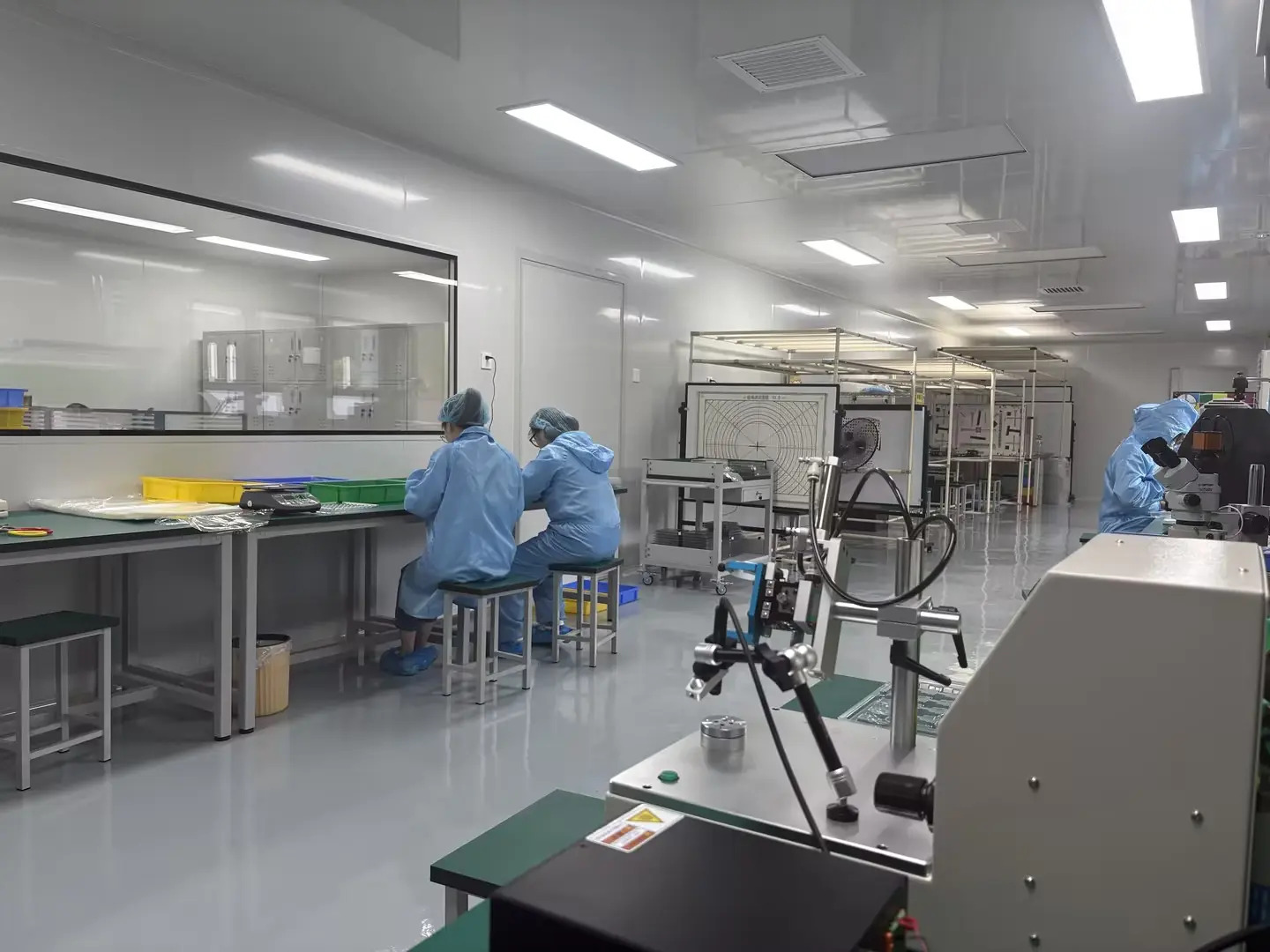
To accelerate this engineering evaluation, CHANCCTV maintains a flexible procurement approach that accepts one-piece sample requests, with stock lens samples typically prepared in approximately 3 days. The company also commits to a 24-hour inquiry response time to keep development schedules on track. For projects with unique optical or mechanical constraints, custom services are routed through dedicated engineering support, making them ideal for prototyping, device integration, and pre-production validation. Publicly available insights into the company's Inspection Workshop and Processing Plant offer buyers a valuable view of the manufacturing and testing environment during supplier due diligence. However, the ultimate reliability of any optical solution is established through project-specific sample testing and the execution of clear acceptance documents.
Expo Buyer Inputs for Faster Lens Matching
At industry gatherings like the China Optics Valley International Optoelectronics Expo, efficient procurement dialogue depends on comprehensive technical inputs. To rapidly match a project with the correct scanning lens, buyers should prepare nine critical data points: sensor format, pixel size, target object size, working distance, field of view (FOV), required resolution, acceptable distortion limits, filter wavelength, and anticipated order quantity.
The completeness of these parameters dictates the speed and accuracy of the selection process. Without an exact working distance or object size, calculating the correct focal length and FOV becomes mathematically impossible; similarly, omitting filter and illumination details prevents reliable contrast predictions. Buyers can utilize CHANCCTV's scanning, low-distortion, and custom service documentation to build an initial list of candidate optical solutions. From there, physical sampling and rigorous system-level testing finalize the technical confirmation. Founded in 2010, CHANCCTV continues to develop comprehensive optical lines covering scanning, low distortion, and machine vision sectors, providing a stable foundation for equipment manufacturers navigating complex integration challenges.
Procurement Synthesis and Next Steps
From capturing industrial barcodes on high-speed lines to preserving museum artifacts through non-contact digitization, reliable scanning requires a precise alignment of optical hardware with specific imaging constraints. By combining optical development experience since 2010 with structured product portfolios, detailed application insights, accessible sampling policies, and targeted custom engineering, CHANCCTV provides a complete procurement pathway—from initial specification filtering to final sample validation.
The company remains committed to its core brand promise: to develop sharper lenses, create ideal solutions, and provide customized services to realize innovation. To initiate project evaluation and match optics to your specific sensor, mount, focal length, working distance, filter, environment, and volume requirements, connect directly with the engineering team at https://www.opticslens.com/.
As a dedicated optical manufacturer, Fuzhou ChuangAn Optics Co., Ltd. (CHANCCTV) addresses these integration challenges by offering a diverse range of scanning lenses spanning multiple sensor formats and mount types. For advanced imaging requirements, the company publicly details configurations tailored for the IMX178 and IMX334 sensors, delivering 1/1.8-inch formats with 8.42M effective pixels alongside versatile infrared (IR) filter options. During events like the China Optics Valley International Optoelectronics Expo, engineering buyers consistently emphasize rapid technical matching. For these procurement teams, complete optical parameters, accessible testing samples, and clearly defined application boundaries are the core prerequisites for advancing a lens configuration into active project evaluation. By bridging product specifications, application data, custom support, and a transparent sample-validation process, CHANCCTV transforms overarching procurement challenges into verifiable optical specifications.
What Defines a Reliable Scanning Lens Solution
The substance of a Reliable Scanning Lens Solution extends far beyond manufacturing a precision lens; it requires locking the sensor, working distance, object size, resolution, illumination, and filter response into a unified imaging architecture. Engineers evaluating optical hardware must ensure that the glass resolves the necessary line pairs per millimeter across the entire field of view while matching the spectral output of the system's light source. Any mismatch between these elements creates data bottlenecks that software correction cannot fully resolve.
The CHANCCTV scanning lens portfolio is built around these system-level definitions, covering widely used sensor formats such as 1/4-inch and 1/2.7-inch. By offering structural choices like M5.5–M12 and M8/M12 interfaces, the manufacturer accommodates the tight spatial constraints of compact scanning modules and close-range identification systems. For higher-resolution demands, the 1/1.8-inch scanning lens configurations are optimized directly for the IMX178 and IMX334 platforms. These high-performance models feature 8.42M effective pixels and support multiple apertures. Crucially, they incorporate selectable filter options—including BW, IR650, IR850, and IR940—allowing integrators to precisely tune the optical path for specific illumination conditions and contrast requirements.
Industrial Scanning Configurations and Use Cases
Different industrial scanning tasks impose distinct demands on optical configurations. For instance, barcode and QR recognition systems prioritize localized sharpness and distortion control to ensure decoding algorithms operate efficiently at high speeds. Conversely, dimensional measurement applications rely heavily on geometric consistency to prevent edge warping, while package and label inspection tasks depend simultaneously on a broad field of view, edge-to-edge clarity, and lighting stability across unpredictable surfaces.
To support these varied applications, close-working-distance scanning lenses are essential for near-field image capture inside compact automation equipment. Standardized mounts such as M8 and M12 simplify the integration of these optics with small sensor boards and embedded scanning modules. For projects where optical distortion metrics are the defining critical factor, the manufacturer's low-distortion product lines can be evaluated alongside standard scanning lenses. This combination allows integrators to establish clear performance boundaries between basic identification tasks and precision measurement requirements, ensuring the chosen optics align perfectly with the harsh realities of the industrial environment.
Non-Contact Scanning for Museum and Cultural Heritage
Beyond the factory floor, the digitization of artworks and cultural heritage items introduces a unique set of optical constraints. Museum archiving requires scanning lenses to capture high-resolution records under strictly non-contact scanning conditions. This process must safely account for delicate material properties, manage complex surface reflections, accommodate varying object dimensions, and prioritize original data preservation above all other metrics.
Selecting the appropriate lens and scanning model requires matching the optical equipment to the specific material texture, physical size, and required detail level of the artwork. Before initiating formal archiving operations, teams must conduct a thorough pre-test to confirm resolution targets, dimensional accuracy, and overall safety protocols. Ultimately, the success of museum digitization depends not only on the optical hardware but on the collaborative workflow between conservation experts, digitization technicians, and quality control personnel. High-performance optics provide the necessary data foundation, but careful procedural execution ensures that equipment parameters translate into reliable archival quality without risking the asset.
Custom Sampling and Validation Workflow
Procuring scanning lenses for specialized equipment necessitates a rigorous validation phase. Before finalizing mechanical designs and committing to volume production, buyers must utilize physical samples to confirm sensor compatibility, verify the field of view, test the working distance, ensure focus stability under vibration, and validate the filter response against the target light source. Theoretical calculations must always give way to empirical testing.
To accelerate this engineering evaluation, CHANCCTV maintains a flexible procurement approach that accepts one-piece sample requests, with stock lens samples typically prepared in approximately 3 days. The company also commits to a 24-hour inquiry response time to keep development schedules on track. For projects with unique optical or mechanical constraints, custom services are routed through dedicated engineering support, making them ideal for prototyping, device integration, and pre-production validation. Publicly available insights into the company's Inspection Workshop and Processing Plant offer buyers a valuable view of the manufacturing and testing environment during supplier due diligence. However, the ultimate reliability of any optical solution is established through project-specific sample testing and the execution of clear acceptance documents.
Expo Buyer Inputs for Faster Lens Matching
At industry gatherings like the China Optics Valley International Optoelectronics Expo, efficient procurement dialogue depends on comprehensive technical inputs. To rapidly match a project with the correct scanning lens, buyers should prepare nine critical data points: sensor format, pixel size, target object size, working distance, field of view (FOV), required resolution, acceptable distortion limits, filter wavelength, and anticipated order quantity.
The completeness of these parameters dictates the speed and accuracy of the selection process. Without an exact working distance or object size, calculating the correct focal length and FOV becomes mathematically impossible; similarly, omitting filter and illumination details prevents reliable contrast predictions. Buyers can utilize CHANCCTV's scanning, low-distortion, and custom service documentation to build an initial list of candidate optical solutions. From there, physical sampling and rigorous system-level testing finalize the technical confirmation. Founded in 2010, CHANCCTV continues to develop comprehensive optical lines covering scanning, low distortion, and machine vision sectors, providing a stable foundation for equipment manufacturers navigating complex integration challenges.
Procurement Synthesis and Next Steps
From capturing industrial barcodes on high-speed lines to preserving museum artifacts through non-contact digitization, reliable scanning requires a precise alignment of optical hardware with specific imaging constraints. By combining optical development experience since 2010 with structured product portfolios, detailed application insights, accessible sampling policies, and targeted custom engineering, CHANCCTV provides a complete procurement pathway—from initial specification filtering to final sample validation.
The company remains committed to its core brand promise: to develop sharper lenses, create ideal solutions, and provide customized services to realize innovation. To initiate project evaluation and match optics to your specific sensor, mount, focal length, working distance, filter, environment, and volume requirements, connect directly with the engineering team at https://www.opticslens.com/.
Fuzhou ChuangAn Optics Co., Ltd.
CHANCCTV
email us here
Visit us on social media:
Instagram
Facebook
YouTube
Other
Legal Disclaimer:
EIN Presswire provides this news content "as is" without warranty of any kind. We do not accept any responsibility or liability for the accuracy, content, images, videos, licenses, completeness, legality, or reliability of the information contained in this article. If you have any complaints or copyright issues related to this article, kindly contact the author above.