

JAPANESE ECONOMIC AND BUSINESS WEEKLY NEWSLETTER: 17 July - 24 July,2026
The EU Japan Centre is releasing a weekly press review covering Japan's economic and business matters.
Outline
▶ Rare-earth costs surge over 20% for Japanese firms, survey shows
17 July, 2026
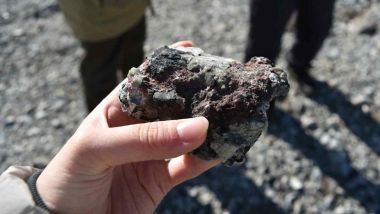
Photo Source: Takako Fujiu/Nikkei
A survey by supply chain risk management firm Resilire found that Japanese companies' rare-earth procurement costs increased by an average of 22.3% over the past year. The rise was driven by China's export restrictions, as well as growing demand from electric vehicles and renewable energy sectors. Many companies have been unable to fully pass the higher costs on to customers, raising concerns about supply chain risks. Companies are now looking to diversify suppliers, strengthen inventories, and expand the use of recycled materials.
▶ Japan OKs economic policy blueprint focused on aggressive spending shift
21 July, 2026
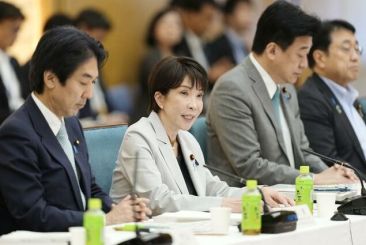
Photo Source: Kyodo
Japan's Cabinet has approved its first economic and fiscal policy guidelines under Prime Minister Sanae Takaichi, emphasizing proactive government spending and long-term investment over fiscal austerity. The plan targets ¥370 trillion in public and private investment by 2040, focusing on strategic sectors such as semiconductors and economic security. While aiming to strengthen growth and maintain fiscal sustainability, the guidelines omit a clear commitment to fiscal consolidation, raising concerns among financial markets about Japan's already high public debt.
Kyodo: https://english.kyodonews.net/articles/-/80344
▶ Japan eyes next homegrown passenger aircraft 3 years after SpaceJet's end
22 July, 2026
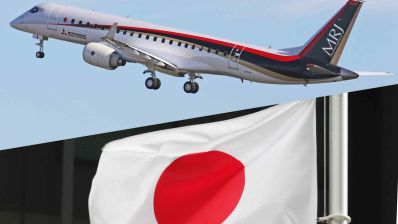
Photo Source: Nikkei
Three years after the cancellation of the Mitsubishi SpaceJet program, Japan is restarting efforts to develop a homegrown passenger aircraft through collaboration with overseas partners. Mitsubishi Heavy Industries and other Japanese companies are working on advanced manufacturing technologies, including robotics and carbon-fiber materials, under a ¥60 billion government-backed project. The initiative aims to strengthen Japan’s role in the next-generation aircraft supply chain, learn from past certification challenges, and eventually restore Japan’s capability to develop and manufacture passenger aircraft by around 2040.
▶ Another iPS product approved for public insurance coverage in Japan
22 July, 2026
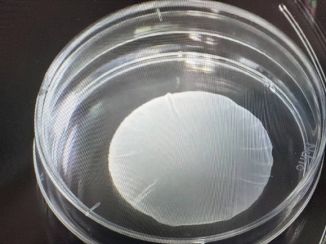
Photo Source: JIJI
Japan has approved public health insurance coverage for RiHeart, an iPS cell-based cardiac muscle cell sheet developed by Cuorips, starting September 1. It is the second iPS cell-derived regenerative medicine product to receive insurance coverage in Japan. The treatment uses heart muscle cells created from iPS cells to help restore function in patients with severe heart failure. Although the official price is ¥53.2 million, patients’ out-of-pocket costs will be reduced through Japan’s high-cost medical care benefit system. The government will continue collecting clinical data for seven years before deciding on full approval.
Japan times:https://www.japantimes.co.jp/news/2026/07/22/japan/science-health/ips-insurance-coverage/
▶ Canada to Join Japan-Britain-Italy Fighter Development Project
22 July, 2026
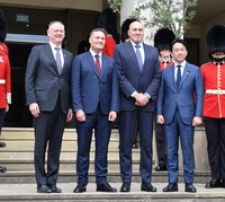
Photo Source: JIJI
Canada has joined the Japan-U.K.-Italy Global Combat Air Program (GCAP) as an observer, marking the first expansion of the project since its launch. Observer status will allow Canada to gain deeper insight into the program and could pave the way for future full membership and potential procurement of the next-generation fighter jet.
JIJI: https://jen.jiji.com/jc/eng?g=eco&k=2026072200254
▶ Anduril, other drone makers eye Japanese tech in global expansion
23 July, 2026
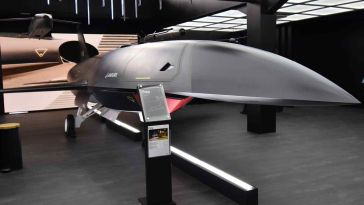
Photo Source: Takako Fujiu/Nikkei
Global drone makers are looking to Japan and its advanced component technologies as they expand production to meet rising demand. Companies such as Anduril are increasing manufacturing capacity, while other drone makers are exploring partnerships and factories in Japan. The war in Ukraine has accelerated demand for low-cost, autonomous drones, expanding the global drone market significantly. Japanese companies, including MinebeaMitsumi, Murata Manufacturing, Nidec, and Panasonic, offer key technologies such as precision bearings, sensors, power semiconductors, and wireless charging systems that can improve drone performance. The Japanese government is also supporting the development of a domestic drone industry and attracting foreign defense startups. However, challenges remain, including regulations and limitations in Japan’s drone operating environment.
▶ Japan's Inpex to test undersea CO2 storage near Tokyo in green steel push
23 July, 2026

Photo Source: Takashi Miyazaki/Nikkei
Japanese energy company Inpex has started exploratory drilling off the coast of Chiba Prefecture for a carbon capture and storage (CCS) project. The goal is to determine whether CO₂ from industries such as steelmaking can be safely stored deep underground. If successful, the project aims to store up to 5 million tons of CO₂ per year and begin commercial operations in the early 2030s. However, high costs and the need for public support remain major challenges, despite government plans to help bridge the funding gap.
▶ Japan space agency conducts Epsilon rocket engine test after failures
23 July, 2026
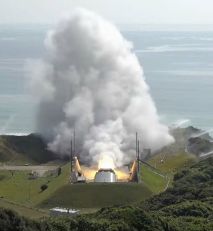
Photo Source: Kyodo
The Japan Aerospace Exploration Agency (JAXA) successfully conducted a ground test of the Epsilon S small rocket’s second-stage engine after two consecutive test failures in 2023 and 2024. The 130-second test was completed as planned using an improved version of an older engine model while investigations into the previous failures continue. Along with the H3 rocket, Epsilon S is considered a key launch vehicle for Japan’s independent satellite launch capability and space strategy.
Kyodo: https://english.kyodonews.net/articles/-/80499
▶ Japan shipbuilding sector draws influx of investors seeking hidden gems
24 July, 2026
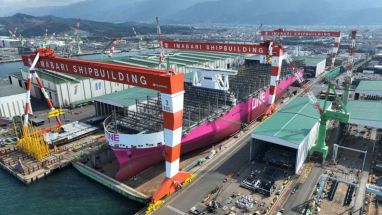
Photo Source: Nikkei
Investors are increasingly buying shares in Japan's shipbuilding sector as the government launches a long-term strategy to revive the industry, aiming to double annual shipbuilding output by 2035. Interest has spread beyond major shipbuilders to niche suppliers in radar, engines, LNG technologies, valves, and marine equipment, with expectations that AI, autonomous ships, and demand for greener vessels will drive future growth. Long-term investors are also targeting undervalued companies with strong global market positions.
▶ Japan aims to build naphtha reserves after Iran war shortages
24 July, 2026

Photo Source: Kai Fujii/Nikkei
Japan is considering building strategic naphtha reserves after the Iran conflict exposed vulnerabilities in its energy supply chain. The government is evaluating whether to stockpile naphtha, petrochemical intermediates, or crude oil, with crude oil seen as the most practical option due to lower storage costs and greater flexibility. The plan aims to strengthen energy security, but implementation will require regulatory changes and government support to offset higher inventory costs for industry.
▶ Japan pulls rare earths from Pacific seabed in drilling test
24 July, 2026

Photo Source: Ryoko Shimoya/Nikkei
Japan has successfully recovered rare-earth elements from deep-sea mud near Minamitorishima, marking progress toward reducing dependence on China-dominated supply chains. The recovered materials include critical elements used in semiconductors, EVs, defense systems, and energy technologies. Japan plans larger-scale tests to assess commercial production, as it seeks to strengthen resource security amid growing geopolitical risks and China’s control over rare-earth processing.
-------------------------------------------------------------------------------------------------------------------------------------
2. Business News
▶ Japan's Olympus envisions robot-assisted future for endoscopy
17 July, 2026
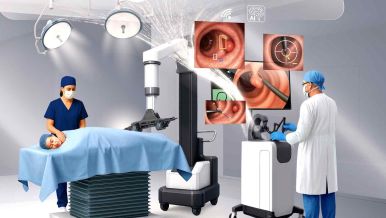
Photo Source: Olympus
Olympus is developing robot-assisted endoscopic surgery systems to transform traditional manual procedures. The company aims to allow doctors to operate from a console with greater precision, comfort, and advanced imaging capabilities. Olympus is also investing in AI technologies to support disease detection and automate medical workflows, while expanding partnerships and investments to strengthen its position in the future digital healthcare market.
Nikkei Asia:https://asia.nikkei.com/business/health-care/japan-s-olympus-envisions-robot-assisted-future-for-endoscopy
▶ Japan chemical maker to double capacity for material in AI server supply chain
18 July, 2026
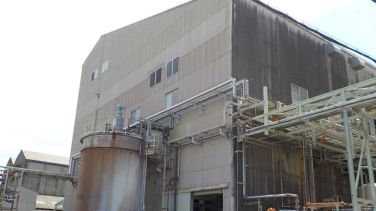
Photo Source: Ishihara Sangyo/Nikkei
Japanese chemical company Ishihara Sangyo Kaisha plans to double production capacity of high-purity titanium dioxide, a key material used in multilayer ceramic capacitors (MLCCs) for AI servers. The company will invest ¥3.9 billion to expand its Mie factory, with production from the expanded facilities expected to begin in 2030. As AI servers require more powerful processors and larger numbers of MLCCs to manage electricity supply and voltage, demand for high-quality materials is increasing. Ishihara Sangyo, which holds a strong global position in this niche market, aims to strengthen its role in the AI supply chain as Japanese component manufacturers expand production.
▶ Japan's 'Silicon Island' attracts rush of financial groups to Kyushu
18 July, 2026
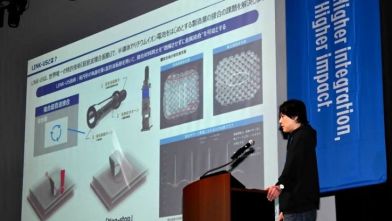
Photo Source: Shotaro Mori/Nikkei
TSMC's expansion into Kyushu has accelerated the region's growth as Japan's "Silicon Island," attracting investment from both Japanese and Taiwanese financial institutions. Regional banks, venture capital firms, and foreign investors are supporting semiconductor startups and helping Taiwanese companies establish operations, while local governments promote innovation and supply chain development. The trend is expected to strengthen further as TSMC's second Kumamoto plant moves ahead.
Nikkei Asia:https://asia.nikkei.com/business/finance/japan-s-silicon-island-attracts-rush-of-financial-groups-to-kyushu2
▶ Itochu to recover critical minerals from used IT devices in Japan
21 July, 2026
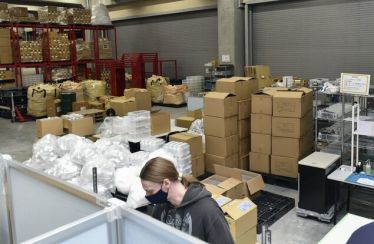
Photo Source: Kyodo
Itochu Corp. will launch a business in November to recover critical minerals from used smartphones and computers, supporting Japan's efforts to strengthen domestic resource recycling. Through a joint venture with a U.S. recycler, the company will process discarded devices and sell recovered materials to manufacturers, helping secure supplies of critical minerals amid growing demand for AI and concerns over China's export controls.
Kyodo: https://english.kyodonews.net/articles/-/80368
▶ IHI partners with Kuva Space to add hyperspectral intelligence to sovereign Earth-observation constellation
21 July, 2026

Photo Source: IHI
IHI has signed an MoU with Finland's Kuva Space to explore the development of hyperspectral satellite technology as part of Japan's planned multi-sensor Earth observation constellation. The partnership aims to strengthen Japan's national and economic security capabilities while supporting civil applications such as agriculture, environmental monitoring, and disaster resilience. The collaboration also reflects growing Japan–Finland cooperation in advanced technologies, space, and dual-use security.
IHI:https://www.ihi.co.jp/en/all_news/2026/aeroengine_space_defense/1202141_13820.html
▶ Japanese self-driving truck venture T2 raises $30m
21 July, 2026

Photo Source: T2
Japanese startup T2, which develops self-driving truck systems, has raised about ¥5 billion from 11 investors, including logistics and shipping-related companies. The company aims to build a nationwide automated logistics network connecting highways, ports, and warehouses. T2 currently operates Level 2 autonomous trucks and plans to commercialize Level 4 self-driving technology by fiscal 2027, helping address future logistics challenges.
Nikkei Asia:https://asia.nikkei.com/business/startups/japanese-self-driving-truck-venture-t2-raises-30m
▶ Sumitomo Chemical to mass-produce solid-state battery material for EVs
21 July, 2026

Photo Source: Sumitomo Chemical
Sumitomo Chemical plans to start mass production of a new halide-based electrolyte material for all-solid-state batteries by fiscal 2028. Developed with Kyoto University and Tottori University, the material aims to deliver performance comparable to sulfide-based electrolytes while lowering manufacturing costs and simplifying production. As solid-state batteries are expected to improve EV safety, charging speed, and driving range, Japanese companies including Nissan, Toyota, and Idemitsu are also accelerating development to compete in the next-generation battery market.
▶ Hitachi launches R&D on silicon quantum computers in collaboration with Intel K.K. and AIST to accelerate the shift from academic demonstration to industrial application
22 July, 2026

Source: Hitachi, Ltd
Hitachi has been selected for a NEDO project to accelerate the development and commercialization of next-generation silicon quantum computers in collaboration with Intel K.K. and AIST through March 2029. The project aims to move quantum computing from academic research to industrial applications by developing technologies for 100-qubit and 1,000-qubit silicon quantum computers, including chip design, advanced packaging, and cloud-based operation. Leveraging existing semiconductor manufacturing processes, the partners plan to establish the foundation for large-scale, fault-tolerant quantum computing. Hitachi aims to launch a cloud-based quantum computing service by fiscal 2027, demonstrate a 100-qubit prototype in 2028 and a 1,000-qubit prototype by 2030, supporting future applications in fields such as AI, drug discovery, materials development, energy, and logistics.
Hitachi (PDF): https://www.hitachi.com/content/dam/hitachi/global/en/press/files/2026/07/260722a.pdf
▶ Japan's Toyota Tsusho seeks to strike gold with rare metal recycling
23 July, 2026
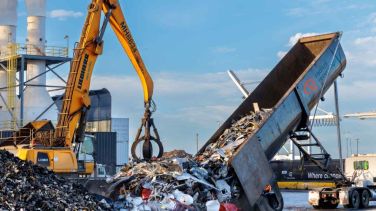
Photo Source:Kosuke Okamoto/Nikkei
Toyota Tsusho plans to invest ¥1.2 trillion ($7.4 billion) by March 2028 to become the world's largest metal scrap recycler, focusing on recovering valuable metals instead of owning mines. The company is expanding its vehicle recycling business in India, where the growing car market is expected to generate more recyclable vehicles, while also increasing its rare-metal recycling operations for used EV batteries in the U.S. and other countries. Following its acquisition of U.S.-based Radius Recycling, Toyota Tsusho now handles 11 million tons of metal scrap annually and aims to increase that to 25 million tons—about 5% of the global market—in the early 2030s. The strategy reflects the company's emphasis on recycling, renewable energy, and stable earnings rather than the resource extraction business pursued by many of its trading house rivals.
Legal Disclaimer:
EIN Presswire provides this news content "as is" without warranty of any kind. We do not accept any responsibility or liability for the accuracy, content, images, videos, licenses, completeness, legality, or reliability of the information contained in this article. If you have any complaints or copyright issues related to this article, kindly contact the author above.
