

Sensitivity of embryonic Chinese rare minnow to fragrance ingredients: A comparison to juveniles and embryonic zebrafish
CHEMICAL TOXICITY DISTRIBUTION (CTD) MODELS.
GA, UNITED STATES, June 4, 2026 /EINPresswire.com/ -- A new study shows that fish embryo toxicity tests using the Chinese rare minnow may provide a promising alternative to conventional acute fish toxicity tests. By testing 26 fragrance ingredients, researchers found that malformation-based endpoints in rare minnow embryos were more closely aligned with juvenile fish toxicity than lethality-based endpoints, supporting the use of embryo tests to reduce animal use in chemical registration and ecotoxicological assessment.
Can tiny fish embryos help make chemical safety testing more ethical and efficient? A study published in Environmental Chemistry and Ecotoxicology provided new evidence to answer just that. The global research team found that embryos of the Chinese rare minnow (Gobiocypris rarus), a native fish species used in China's chemical regulatory testing, may serve as a useful alternative to conventional acute toxicity tests with juvenile fish.
"Fish acute toxicity tests are widely used to evaluate the potential hazards of chemicals to aquatic organisms," says senior and corresponding author Jing You. "However, these tests with either juvenile or adult fish raise animal welfare concerns."
In regulatory contexts where fish toxicity data are required for native species, embryo-based tests may help reduce reliance on conventional fish tests and avoid redundant testing. Yet, the applicability of fish embryo toxicity tests to the Chinese rare minnow has remained insufficiently understood.
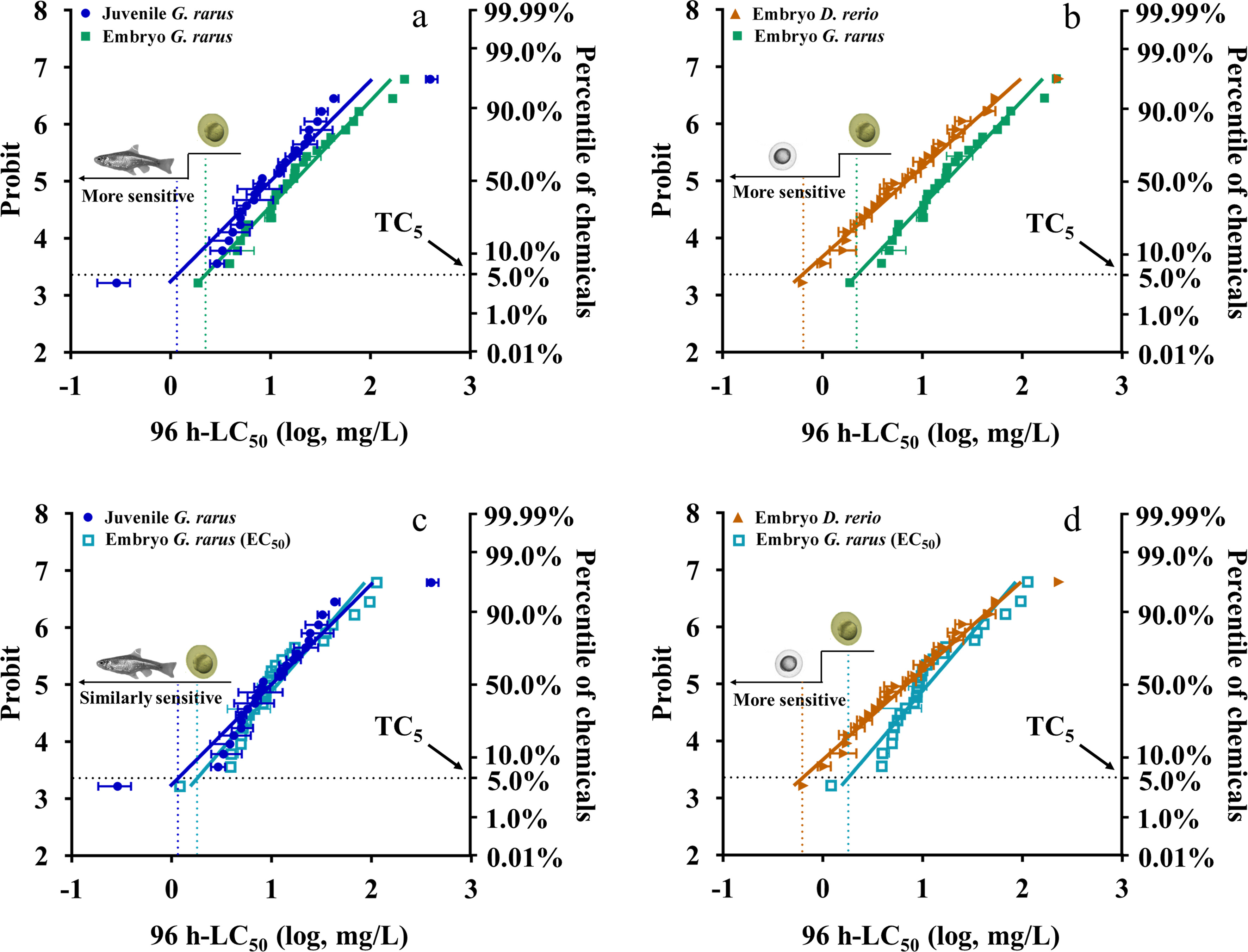
To address this gap, the research team tested 26 fragrance ingredients with diverse physicochemical properties using a newly developed rare minnow fish embryo toxicity test. They then compared toxicity sensitivity across three test systems, including rare minnow embryos, rare minnow juveniles, and zebrafish (Danio rerio) embryos.
"We found that the toxicity of the fragrance ingredients to rare minnow embryos covered a wide concentration range," shares You. "When lethality was used as the endpoint, zebrafish embryos were the most sensitive, followed by rare minnow juveniles and then rare minnow embryos."
However, when malformations in rare minnow embryos were used as the endpoint, rare minnow embryos showed sensitivity more comparable to that of rare minnow juveniles than lethality endpoint. "This finding highlights the importance of endpoint selection in fish embryo toxicity testing," says You. "For the Chinese rare minnow, sublethal effects such as malformations may provide a more sensitive and informative endpoint than lethality alone."
The team also used chemical toxicity distribution and chemical ratio distribution models to evaluate sensitivity differences across species and life stages. "These models supported the conclusion that rare minnow embryo tests, particularly when based on malformation endpoints, have the potential to serve as an alternative to conventional acute fish toxicity tests with rare minnow juveniles," adds You.
This work is particularly relevant for chemical safety assessment in China, where toxicity data for native fish species such as the Chinese rare minnow are important for chemical registration. By expanding toxicity data for rare minnow embryos and comparing their sensitivity with existing juvenile fish and zebrafish embryo data, the study provides technical support for refining alternative testing strategies in ecotoxicology.
"Replacing or complementing juvenile fish tests with embryo-based assays could help reduce animal use and avoid redundant testing," says You. "Further optimization of rare minnow embryo test protocols will be important for improving their reliability and broader regulatory applicability."
References
DOI
10.1016/j.enceco.2026.05.005
Original Source URL
https://doi.org/10.1016/j.enceco.2026.05.005
Funding information
This research was supported by the National Natural Science Foundation of China (42377270), the Innovative Research Team of the Department of Education of Guangdong Province (2020KCXTD005), and a collaborative research project with dsm-firmenich.
Lucy Wang
BioDesign Research
email us here
Legal Disclaimer:
EIN Presswire provides this news content "as is" without warranty of any kind. We do not accept any responsibility or liability for the accuracy, content, images, videos, licenses, completeness, legality, or reliability of the information contained in this article. If you have any complaints or copyright issues related to this article, kindly contact the author above.
